Insights from my experience as head of procurement
Reflecting on my career as head of procurement, I have come to realize that strategic sourcing and efficient procurement processes are not just about saving costs—they are about creating value for the entire organization. Allow me to share a case study that highlights the steps and methodologies that have guided my journey in optimizing purchasing and ensuring seamless procurement operations.
Continue reading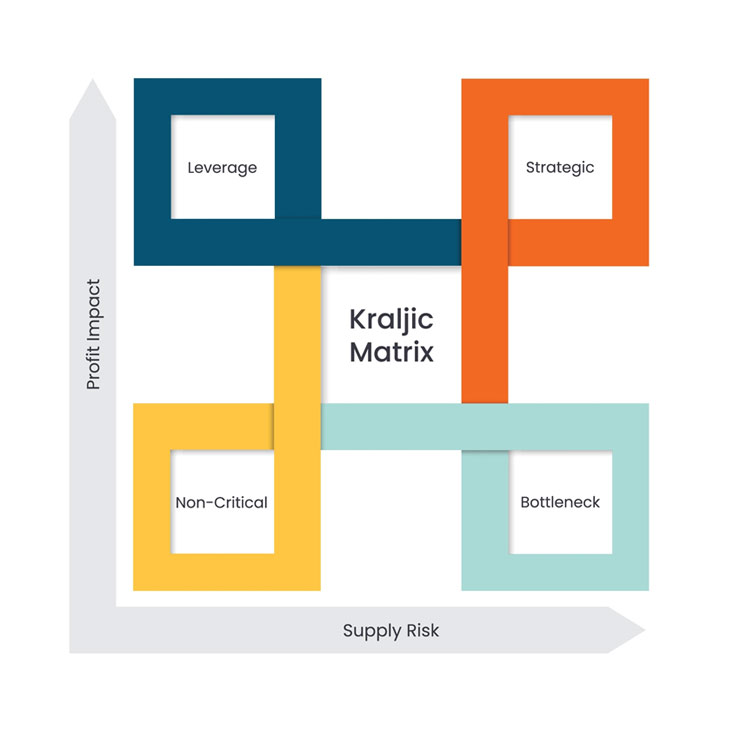
My journey in procurement began with a deep understanding of the importance of managing the acquisition of goods and services efficiently. Over the years, I have developed strategies that not only reduce costs but also enhance the overall efficacy of procurement activities. One of the key frameworks that have guided my approach is the Kraljic model, which provides a systematic way to analyse and categorize procurement activities.
The Kraljic model is a strategic tool that helps identify the procurement strategy for different products and services based on their risk and profitability.
My first step in any procurement analysis involves categorizing items into four quadrants: non-critical items, leverage items, bottleneck items, and strategic items. This categorization allows for tailored sourcing strategies that align with the company's goals and market conditions.
Non-Critical Items
For non-critical items, which have low supply risk and low impact on profitability, I focus on streamlining processes for maximum efficiency. This includes automating order placements, building reliable supplier relationships, and implementing inventory management systems that ensure availability without overstocking.
Leverage Items
Leverage items, characterized by low supply risk but high impact on profitability, offer substantial opportunities for cost savings. By consolidating purchase volumes and negotiating favorable terms with suppliers, I have been able to secure significant discounts and longer payment terms, thereby reducing overall expenditure.
Bottleneck Items
Bottleneck items have high supply risk and low impact on profitability. To mitigate risks associated with these items, I ensure diversification of suppliers and maintain buffer stocks to prevent disruptions in supply. Regular market analysis helps identify potential risks early and allows for proactive measures.
Strategic Items
Strategic items have high supply risk and high impact on profitability. These items require close collaboration with suppliers to innovate and improve product quality and delivery. Long-term partnerships and joint development initiatives ensure that strategic items meet our evolving needs and contribute to the company's competitive advantage.
Driving Efficiency
in Procurement Tasks
Efficiency in procurement tasks is achieved through a combination of technology, process optimization, and skilled personnel. Here are some strategies that have proven effective in my experience:
Leveraging Technology
Utilizing procurement software and digital tools has streamlined the entire procurement lifecycle, from requisition to payment. Automated workflows and real-time analytics enable quick decision-making and reduce manual errors.
Process Optimization
Regularly reviewing and refining procurement processes ensures they remain aligned with organizational goals. Implementing best practices, such as just-in-time purchasing and vendor-managed inventory, minimizes waste and maximizes efficiency.
Conclusion, reflecting on my years as head of procurement, the key to achieving savings and efficiency lies in strategic planning and continuous improvement. The Kraljic model has been instrumental in guiding procurement strategies, while technology and process optimization have enhanced operational efficiency. By applying these principles, we can drive significant value for any organization.